EN
EN  JA
JA 
A Simple Guide for Cooking
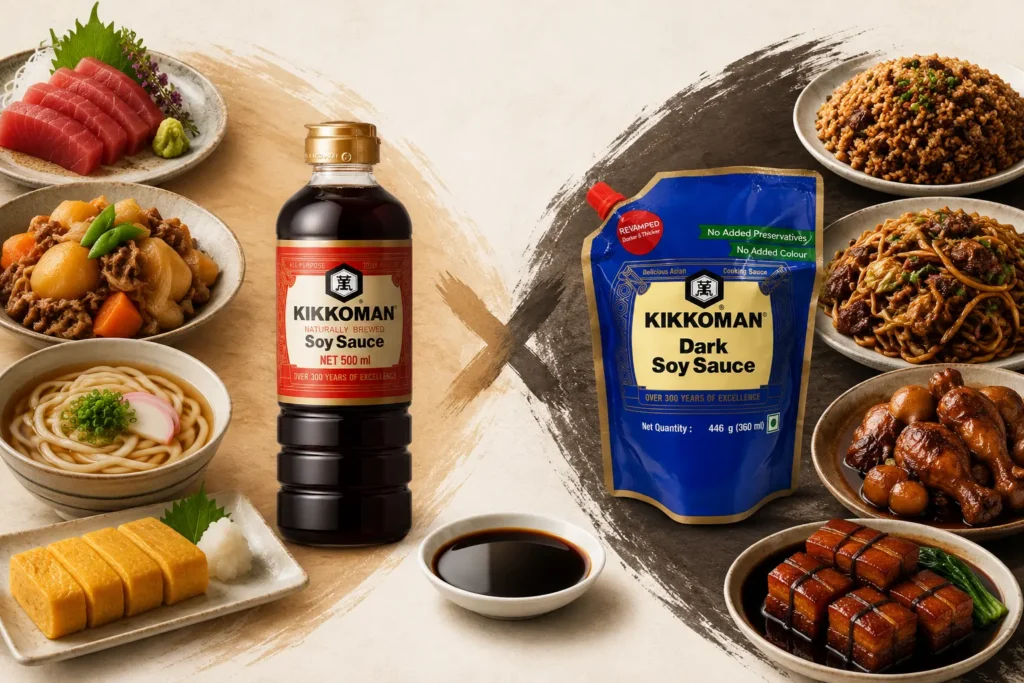
Soy sauce is one of the most essential seasonings in Asian cuisine, but many people are surprised to learn that there are different types of soy sauce. The two most common are Light Soy Sauce (regular soy sauce) and Dark Soy Sauce. They may look similar, but their flavor, color, and cooking uses are quite different.
What is Light Soy Sauce?
Light Soy Sauce is the standard soy sauce used in many Japanese dishes. It is made from soybeans, wheat, salt, and water, and is fermented to develop a balanced salty and umami flavor.
Characteristics
- Color: Reddish brown
- Flavor: Salty, savory, and aromatic
- Texture: Thin and smooth
Best Uses
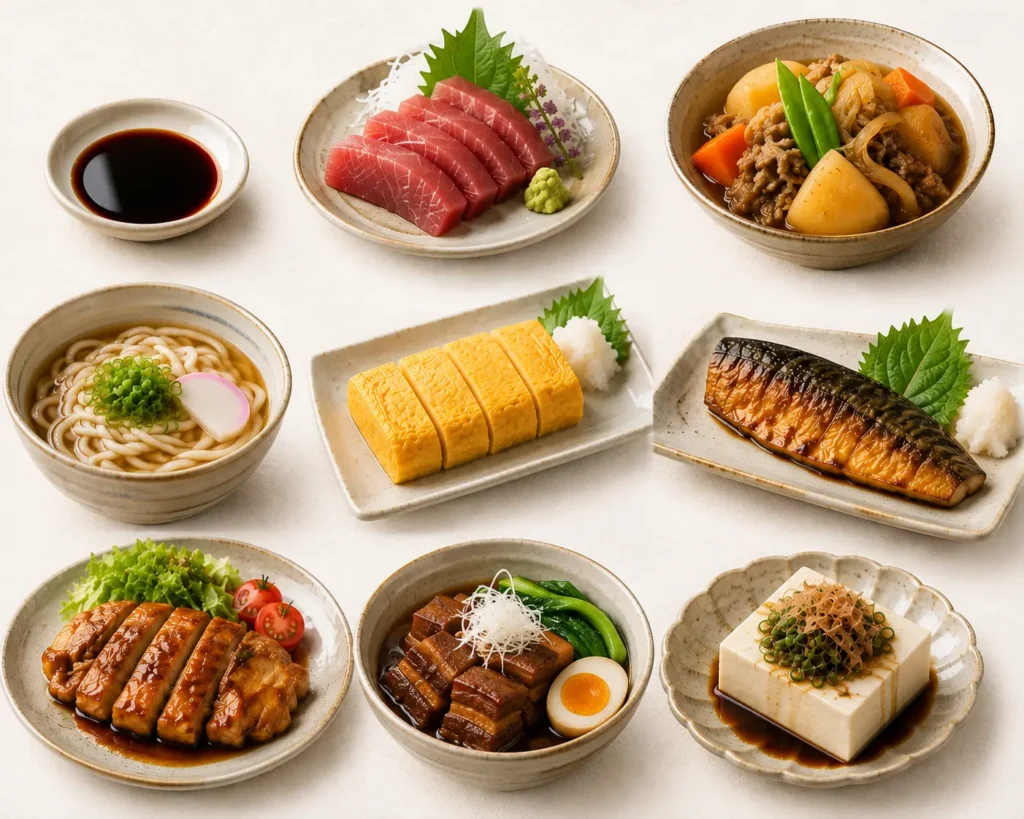
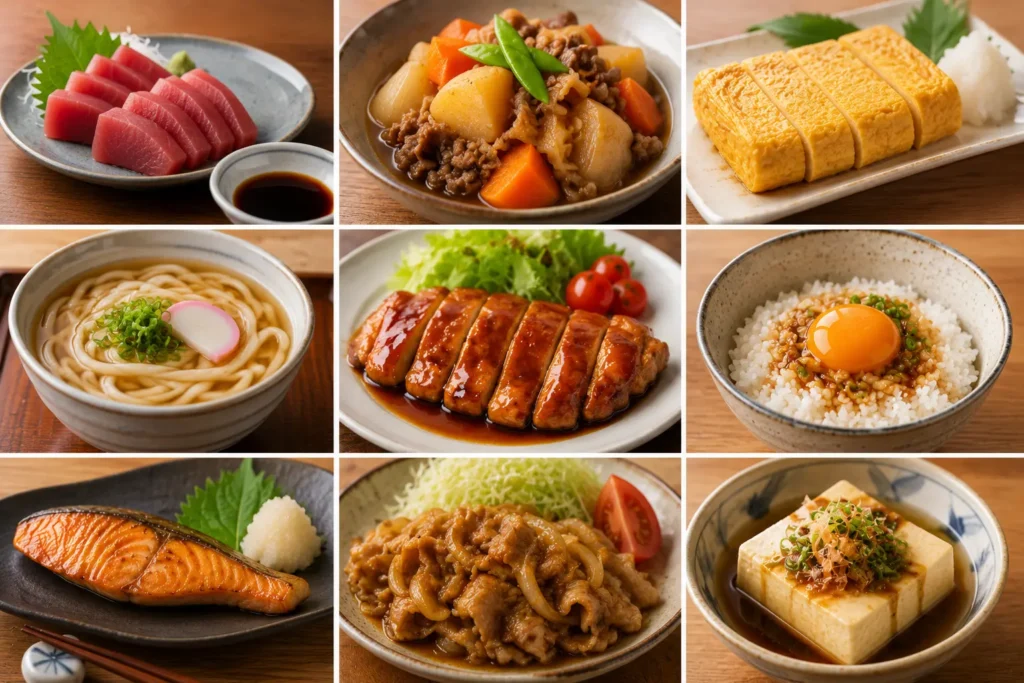
- Sushi and sashimi dipping sauce
- Salad dressings
- Soups and noodle broths
- Everyday seasoning for stir-fries and grilled dishes
In Japan, when a recipe simply says “soy sauce”, it usually refers to this regular type.
What is Dark Soy Sauce?
Dark Soy Sauce is commonly used in Chinese cooking. It is aged longer and often contains added sugar or molasses, giving it a darker color and slightly sweeter flavor.
Characteristics
- Color: Deep dark brown
- Flavor: Milder saltiness with a hint of sweetness
- Texture: Thicker and richer
Best Uses
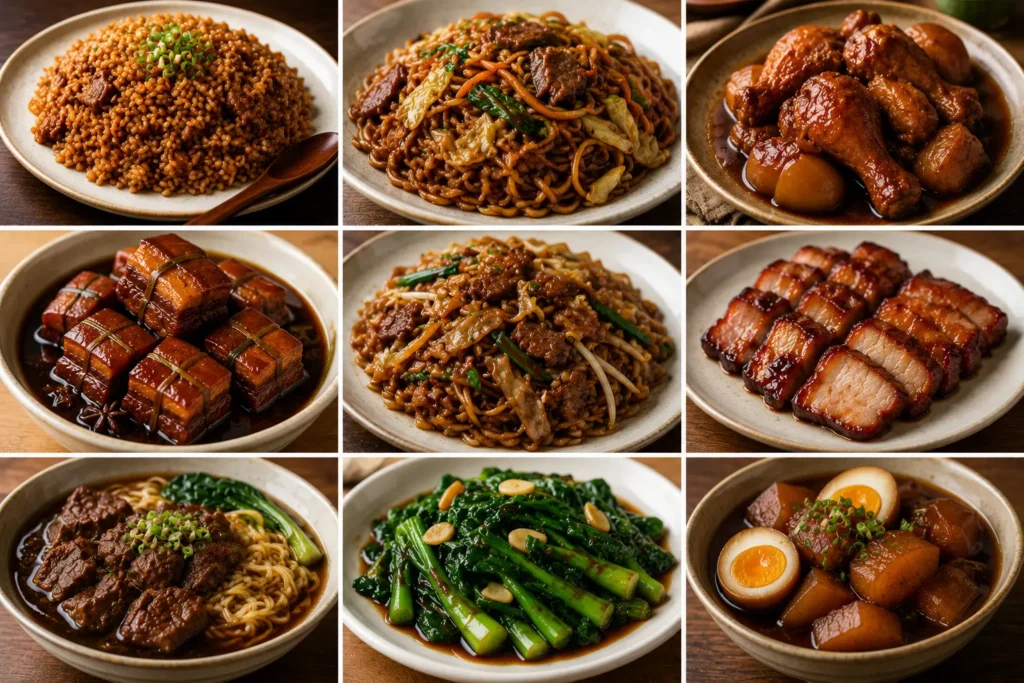
- Fried rice
- Chow mein and other noodle dishes
- Braised meats
- Dishes where a rich brown color is desired
Dark Soy Sauce is used more for color and depth than for saltiness.
Side-by-Side Comparison
| Feature | Light Soy Sauce | Dark Soy Sauce |
| Color | Reddish brown | Very dark brown |
| Saltiness | Higher | Lower |
| Sweetness | Very little | Slightly sweet |
| Texture | Thin | Thicker |
| Main Purpose | Seasoning and flavor | Color and richness |
| Common Cuisine | Japanese | Chinese |
Which One Should You Use?
Use Light Soy Sauce when:
- You want a clean soy sauce flavor.
- You are making Japanese dishes such as teriyaki, udon soup, or tamagoyaki.
- The recipe calls for “soy sauce” without specifying a type.
Use Dark Soy Sauce when:
- You want a darker color in fried rice or noodles.
- You are making braised dishes.
- You want a slightly sweeter and richer finish.
Can You Substitute One for the Other?
You can, but the result will change.
- Light Soy Sauce instead of Dark Soy Sauce: The dish will be lighter in color and may taste saltier.
- Dark Soy Sauce instead of Light Soy Sauce: The dish will become darker, slightly sweeter, and less salty.
For the best flavor, it is ideal to keep both types in your kitchen.
Final Thoughts
Light Soy Sauce and Dark Soy Sauce are not simply lighter or darker versions of the same seasoning. Light Soy Sauce provides saltiness and umami, while Dark Soy Sauce adds color, sweetness, and richness. Understanding the difference will help you choose the right soy sauce for each dish and make your cooking taste more authentic.
Whether you are preparing sushi, ramen, fried rice, or braised pork, selecting the correct soy sauce can make a noticeable difference in both flavor and appearance.