 EN
EN  JA
JA 

Introduction
Miso soup is one of the most popular dishes in Japan and is served with breakfast, lunch, and dinner. Although it looks simple, a good bowl of miso soup has a rich, comforting flavor that comes from a few carefully chosen ingredients. The best part is that it is easy to make, even in an Indian kitchen. This guide explains the ingredients you need, how to prepare authentic miso soup, common mistakes to avoid, and how to store it safely in India’s warm climate.
What Is Miso Soup?
Miso soup is a traditional Japanese soup made with miso, a fermented soybean paste, mixed into dashi, a light Japanese soup stock. Various ingredients such as tofu, seaweed, mushrooms, and spring onions are then added.
Unlike creamy soups, miso soup is light but full of umami, the rich savory taste found in many Japanese dishes.
Miso soup is commonly served with:
- Japanese rice
- Grilled fish
- Sushi
- Onigiri (Japanese rice balls)
- Bento (Japanese lunch boxes)
What Products Do I Need?
Making authentic miso soup requirse only a few ingredients.
Essential Ingredients
- Miso paste (white miso, yellow miso, or red miso)
- Dashi stock or dashi powder
- Water
Popular Additions
- Silken tofu or firm tofu
- Dried wakame seaweed
- Spring onions
- Shiitake mushrooms
- Enoki mushrooms
- Aburaage (fried tofu pockets)
You can also add vegetables such as:
- Daikon radish
- Carrots
- Spinach
- Cabbage
These ingredients make the soup more filling while keeping its traditional flavor.
Understanding Miso
Not all miso tastes the same.
White Miso (Shiro Miso)
- Mild and slightly sweet
- Best for beginners
- Perfect for light soups
Yellow Miso (Shinshu Miso)
- Balanced flavor
- Good for everyday cooking
Red Miso (Aka Miso)
- Rich and bold
- Stronger fermented taste
- Popular in colder regions of Japan
If this is your first time making miso soup, white or yellow miso is usually the easiest choice.
How to Make Miso Soup in an Indian Kitchen
You don’t need special equipment.
A saucepan and a spoon are enough.
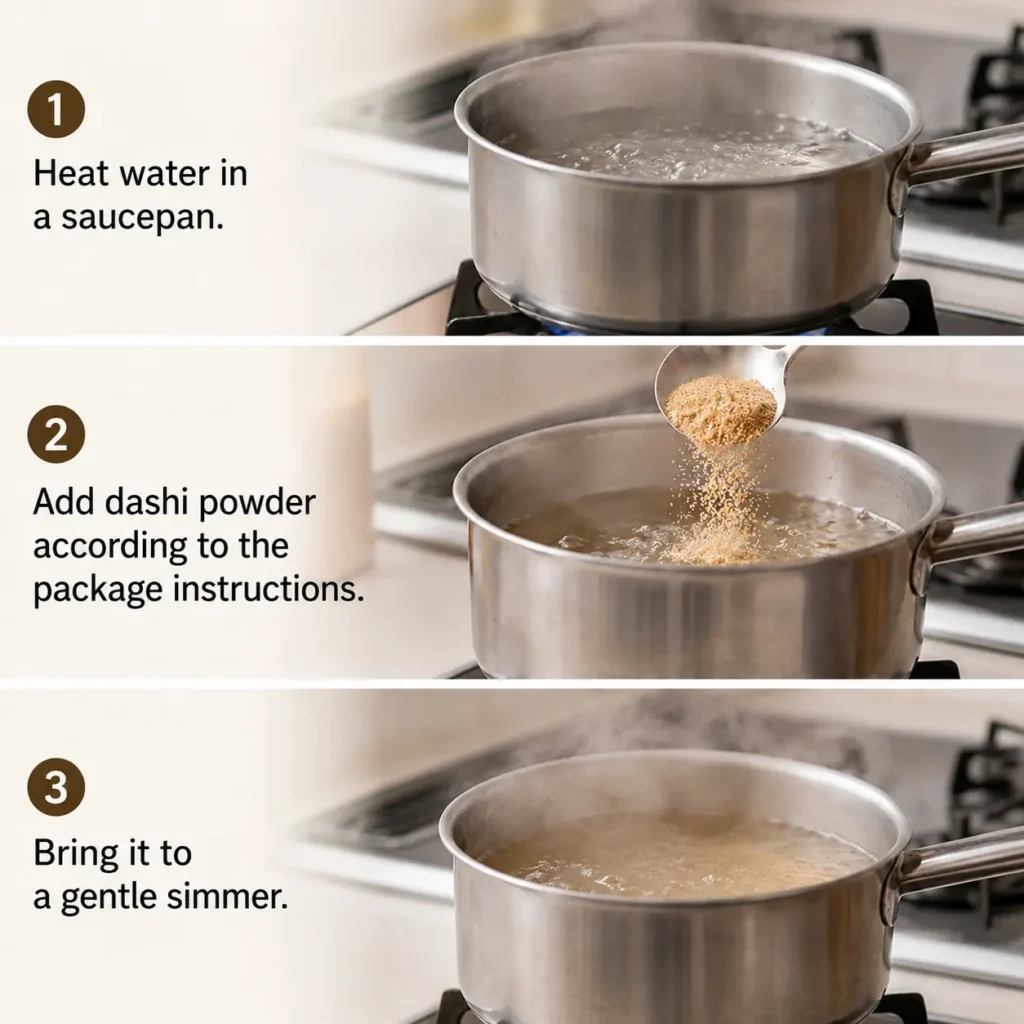
Step 1: Prepare the Dashi
Heat water in a saucepan.
Add dashi powder according to the package instructions.
Bring it to a gentle simmer.
Dashi is the foundation of miso soup and provides its signature umami flavor.
Step 2: Cook the Ingredients
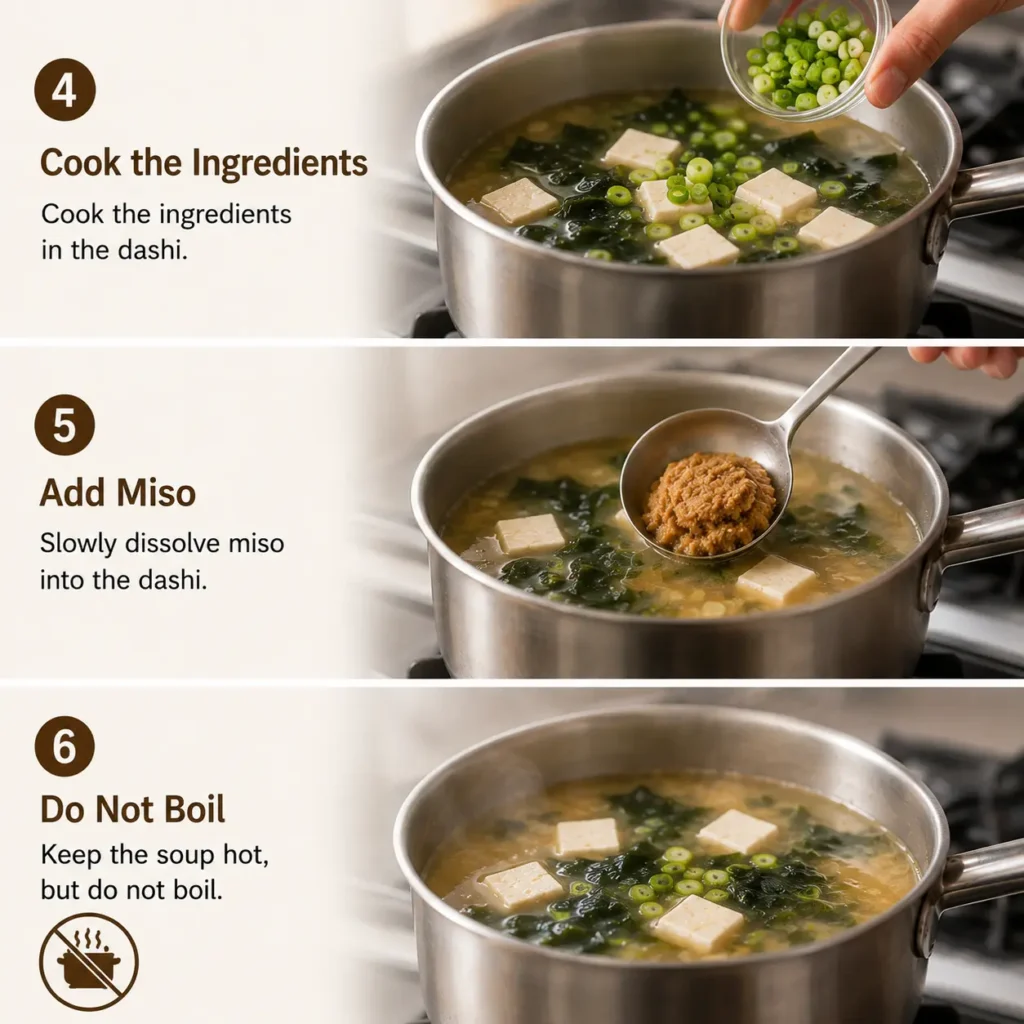
If you’re using vegetables such as carrots, daikon, or mushrooms, add them first because they take longer to cook.
If you’re using tofu, add it later since it only needs to warm through.
If you’re using dried wakame seaweed, soak it briefly in water or add it near the end of cooking, depending on the package instructions.
If you’re using dried wakame seaweed, soak it briefly in water or add it near the end of cooking, depending on the package instructions.
Step 3: Add the Miso
Turn the heat to low.
Place the miso paste in a ladle or small sieve.
Slowly dissolve it into the hot dashi.
Stir gently until the miso is completely mixed.
Avoid adding miso directly in one large lump, as it may not dissolve evenly.
Step 4: Do Not Boil
After adding the miso, keep the soup hot but do not let it boil.
Boiling can reduce the delicate aroma and change the flavor of the miso.
Step 5: Serve Immediately
Pour the soup into bowls.
Top with chopped spring onions if desired.
Serve alongside freshly cooked Japanese rice for a classic Japanese meal.
Common Mistakes to Avoid
Boiling After Adding Miso
This is the most common mistake.
Always lower the heat before adding miso and avoid a rolling boil afterward.
Using Too Much Miso
More miso does not always mean more flavor.
Too much can make the soup overly salty.
Start with the amount recommended on the package and adjust gradually.
Skipping the Dashi
Miso alone cannot create authentic miso soup.
Dashi provides the savory depth that makes the soup taste balanced.
Overcooking the Tofu
Tofu is delicate.
Add it near the end of cooking so it stays soft and doesn’t break apart.
Adding Too Many Ingredients
Traditional miso soup is simple.
Using just two or three ingredients allows the flavor of the miso and dashi to shine.
How to Store Miso Soup in Indian Weather
Because temperatures are often warm in India, proper storage is important.
Before Serving
Serve the soup soon after cooking.
Avoid leaving it at room temperature for more than two hours, or less if the weather is very hot.
Refrigeration
Store leftover soup in an airtight container.
Refrigerate immediately after it has cooled slightly.
Enjoy within 1 to 2 days.
Reheating
Heat the soup gently over low heat.
Do not let it boil.
If the soup contains tofu, stir carefully to avoid breaking it.
Can You Freeze Miso Soup?
Plain miso soup freezes well.
However, tofu may become firmer after freezing, and some vegetables can lose their texture.
For the best taste, make fresh soup whenever possible.
Frequently Asked Questions
Yes, but it will taste different.
Vegetable stock can be used as an alternative, especially for vegetarian cooking, but traditional Japanese miso soup is made with dashi.
It depends.
Traditional dashi often contains bonito flakes (dried fish).
For a vegetarian version, use kombu (kelp) dashi or shiitake mushroom dashi.
Suggested internal links:
Vegetarian Dashi Guide
Kombu Guide
Shiitake Mushroom Guide
Yes.
Udon noodles or somen noodles can be added to create a light meal.
Many Japanese families enjoy miso soup daily as part of a balanced diet.
By varying the vegetables, tofu, mushrooms, and seaweed, each bowl can taste a little different.
Bonus: 🇯🇵 Japanese Insider Tip
You might notice that Japanese people often drink miso soup directly from the bowl instead of using a spoon. This isn’t just about tradition; it’s about the aroma (kaori). By bringing the bowl to your lips, you can smell the gentle scent of dashi and miso before the soup touches your tongue. In Japanese cooking, smell is just as important as taste. Try enjoying your soup this way—it completely changes how you perceive the delicate flavors.
Final Thoughts
Mastering the art of miso soup at home might seem nuanced, but with the simple ritual of combining quality dashi and your preferred miso, it becomes an effortless and deeply nourishing practice. By respecting the delicate balance of your ingredients—gently simmering your dashi and taking care not to boil the miso—you can preserve the vibrant umami and complex aromas that define authentic Japanese cuisine. Whether you are adding silky tofu, earthy mushrooms, or vibrant seasonal vegetables, bringing this comforting bowl to your table is a wonderful way to connect with tradition. Take a moment to enjoy the aroma, savor the warmth, and appreciate the simple joy of creating restaurant-quality miso soup right in your own kitchen.