 EN
EN  JA
JA 

Introduction
Sashimi grade fish is one of the most popular ingredients in Japanese cuisine. Whether you’re making sashimi, sushi, poke bowls, or seafood rice bowls, the way you thaw the fish is just as important as the quality of the fish itself.
For most sashimi-grade fish, slow defrosting in the refrigerator is a simple and reliable method. However, there is also a professional Japanese technique using warm salt water that can help preserve its colour, texture and flavour.
This guide explains both methods and how to handle sashimi-grade fish safely in an Indian kitchen.
What Is Sashimi Grade Fish?
Sashimi grade fish is fish that has been handled and frozen according to strict standards so it can be safely eaten raw. While “sashimi grade” is not an official legal term in many countries, reputable suppliers use careful sourcing, processing, and freezing practices to provide fish suitable for raw consumption.
Common sashimi grade seafood includes:
These fish are commonly used for:
- Sashimi
- Sushi
- Chirashi (a bowl of sushi rice topped with seafood)
- Poke bowls
- Carpaccio
What Products Do I Need?
You don’t need special equipment to thaw sashimi grade fish properly.
Essential Items
- Frozen sashimi grade fish
- Refrigerator
- Clean plate or shallow container
- Kitchen paper towels
For the professional method
• Clean bowl
• Water heated to approximately 40°C
• Salt
• Kitchen thermometer, if available
Optional
• Zip-lock bag or airtight container
• Sharp knife for slicing
• Cutting board reserved for raw seafood
Keep raw seafood separate from vegetables and cooked foods to reduce the risk of cross-contamination.
Method 1: Refrigerator Thawing
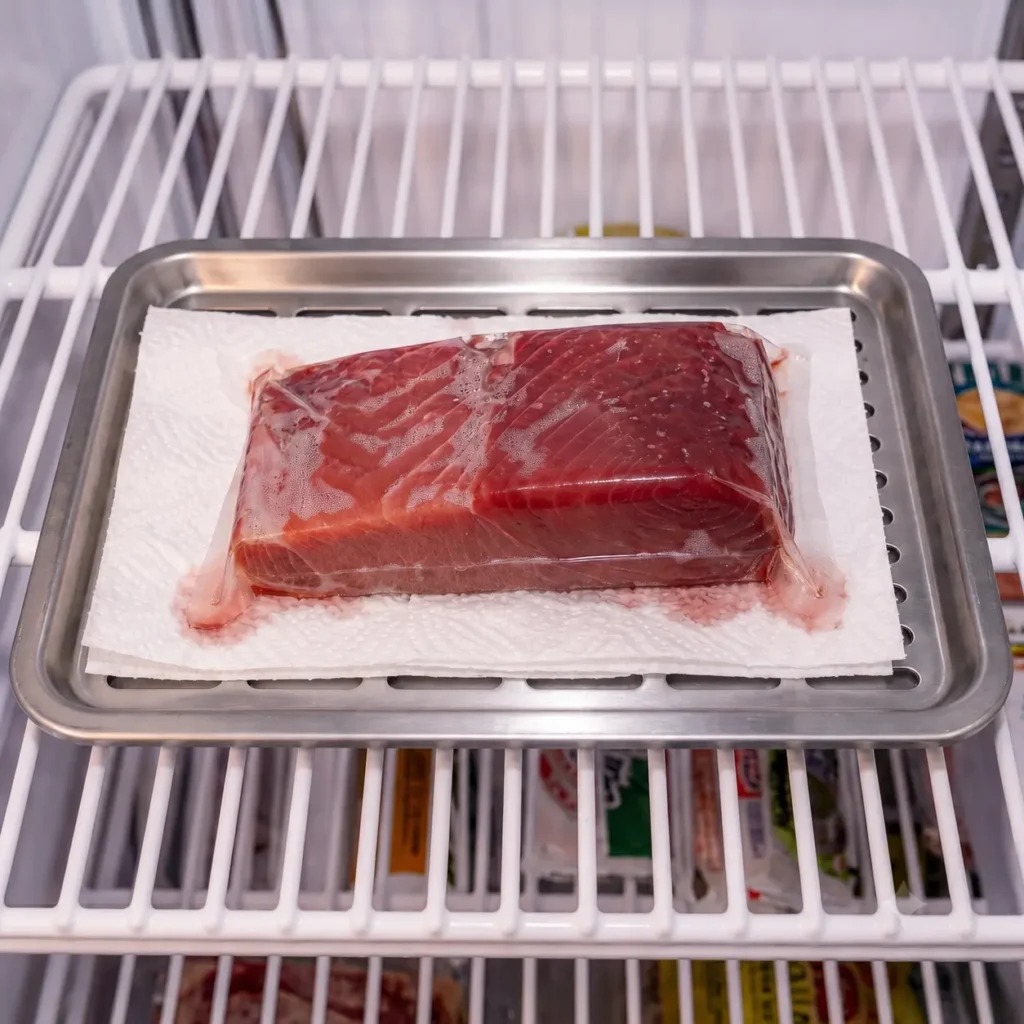
Best for most sashimi-grade fish and the simplest method for home kitchens.
Step 1
Remove the fish from the freezer.
Keep it in its original sealed packaging if possible.
If the package has already been opened, place the fish in a clean airtight container or wrap it tightly.
Step 2
Place it on a plate in the refrigerator.
The plate catches any moisture that may drip during thawing.
Step 3
Allow it to thaw slowly.
Approximate thawing times:
- Thin slices: 3–5 hours
- Small fillets: 6–8 hours
- Larger blocks: Overnight
The refrigerator should be kept at 4°C or below.
Slow thawing helps maintain the fish’s firmness and quality.
Method 2: Professional Warm Salt-Water Method
This is a traditional Japanese technique particularly used for frozen tuna.
If you are preparing frozen tuna and want a more professional-style result, try the warm salt-water method before completing the thawing process in the refrigerator.
Japanese tuna specialists commonly use water around 40°C with approximately 3% salt. The tuna is briefly immersed for about 1–2 minutes, then dried and returned to the refrigerator to finish thawing. (Sushi University)
Step 1:
Prepare the salt water
Prepare approximately 1 litre of water at 40°C.
Add approximately 30g of salt to create a 3% salt-water solution.
The water should feel warm, not hot.
Step 2:
Briefly immerse the tuna
Place the frozen tuna block into the warm salt water for approximately 1–2 minutes.
The purpose is to gently treat the surface of the frozen tuna, rather than completely thawing it in the warm water.
Step 3:
Remove and dry
Remove the tuna and gently rinse away excess salt from the surface with clean water.
Pat the surface thoroughly dry with kitchen paper.
Step 4:
Finish thawing in the refrigerator
Wrap the tuna in clean kitchen paper and place it in a clean container or wrap securely.
Return it to the refrigerator and allow it to finish thawing slowly.
The exact time depends on the size and thickness of the tuna block.
Why use warm salt water?
This method is popular among Japanese tuna specialists because it can help:
• Preserve the tuna’s colour and appearance
• Reduce excessive drip loss
• Maintain a firmer, less watery texture
• Help retain the tuna’s natural flavour and umami
A salt concentration of around 3% is close to seawater. Japanese sources commonly recommend this technique for frozen tuna, and sensory research has found warm salt-water thawing can result in less perceived wateriness and stronger perceived umami compared with some other thawing methods. (J-STAGE)
Important: The 40°C warm salt-water method is primarily a technique for frozen tuna. For salmon, scallops and other sashimi-grade seafood, follow the supplier’s recommended thawing method; refrigerator thawing is the simplest general approach.
Preparing the Fish After Thawing
1. Pat It Dry
Gently pat the fish dry with clean kitchen paper.
Removing excess surface moisture gives the fish a cleaner texture and appearance.
2. Slice with a Sharp Knife
Use a clean, sharp knife to make smooth cuts without tearing the fish.
For sashimi, the direction and thickness of the cut can vary depending on the type of fish and the cut being prepared.
3. Keep It Chilled
Keep the fish refrigerated until you are ready to serve it.
Sashimi is best served cold and consumed soon after preparation.
Common Mistakes to Avoid
Thawing at Room Temperature
Avoid leaving frozen fish on the kitchen counter.
In India’s warm climate, harmful bacteria can grow quickly as the surface warms while the inside remains frozen.
Using Very Hot Water
Very hot water starts to cook the outside before the inside has thawed. This changes the texture and reduces freshness.
The professional tuna method uses warm water at approximately 40°C for only 1–2 minutes, followed by drying and refrigerated thawing. It is not the same as leaving fish in warm water until completely thawed.
The warm salt-water method is a brief surface treatment, not a method for completely thawing the tuna.
After the 1–2 minute salt-water treatment, the tuna should be dried and returned to the refrigerator to finish thawing.
Refreezing Thawed Fish
Once sashimi grade fish has completely thawed, it should not be refrozen unless it has been cooked first.
Repeated freezing and thawing can affect both quality and food safety.
Leaving Fish in Melted Water
After thawing, remove the fish from any liquid immediately.
Excess moisture can affect the texture and flavor.
Waiting Too Long Before Eating
Raw seafood is best enjoyed soon after thawing.
Plan your meal so the fish is served as fresh as possible.
How to Store Sashimi Grade Fish in Indian Weather
Because much of India has a warm climate, proper storage is especially important.
Before Thawing
Keep frozen fish at -18°C or below until you’re ready to use it.
Avoid leaving frozen fish out while preparing other ingredients.
After Thawing
Store the fish in the refrigerator at 0–4°C.
For the best quality, eat it within 24 hours of thawing.
Leftovers
If sashimi has already been sliced and served, any leftovers should generally not be kept for another raw meal.
If there are leftovers, they are safest when cooked thoroughly before eating. When in doubt about the safety or freshness of leftover raw fish, discard it rather than taking a risk.
Frequently Asked Questions
No.
Microwaves thaw unevenly and can partially cook the fish, changing its texture.
Yes.
Once fully thawed and kept refrigerated, sashimi grade fish can be sliced and served immediately.
A small amount of moisture is normal.
Simply pat the fish dry with paper towels before slicing.
For traditional sashimi, fish is usually served without marinating so its natural flavor stands out.
However, for dishes like poke bowls, light marinades made with soy sauce, sesame oil, or ponzu are popular.
Bonus: 🇯🇵 Japanese Insider Tip
For tuna, many Japanese professionals use the brief warm salt-water treatment before completing the thawing process in the refrigerator. The goal is not simply to thaw the fish quickly, but to protect its texture, colour and flavour during thawing.
Final Thoughts
Good sashimi starts with good fish, but proper defrosting is just as important.
For most sashimi-grade fish, slow refrigerator thawing is the simplest method. When preparing frozen tuna, the 40°C warm salt-water technique is a professional-style Japanese method that can help reduce drip loss and maintain the tuna’s texture, colour and flavour.
Handle the fish carefully, keep it cold, keep your preparation area clean, and follow the storage instructions provided by your supplier.
That way, you can enjoy high-quality sashimi at home while getting closer to the techniques used in Japanese kitchens.